
Power banks, drones, smart storage — these sharing businesses all depend on “unattended operation plus remote management”, and every one of them starts with a reliable 4G control board.
Bottom line: a networking upgrade means “status known in real time, controllable remotely” — pick a board with a built-in 4G module and matching lock-drive capability, insert a SIM card, and it connects to mainstream IoT cloud platforms without any extra gateway.
This article breaks down why legacy cabinets need upgrading, what a single board can do, the key implementation points, a solution comparison and an FAQ.
Why legacy cabinets need upgrading
Traditional cabinets use mechanical locks or locally controlled electronic locks: operators have no idea which compartment is occupied, who borrowed and never returned, or whether the device is even online. Manual inspection is expensive, and losses and disputes are hard to trace. The goal of a networking upgrade is simple: every compartment’s status is known in real time and controllable remotely.
What one board can do
The WGX-12 manages 12 independent compartment locks on a single board: rental/return status detection, remote unlock, lock and status queries, plus customizable voice prompts that guide users through pickup and return. With a built-in 4G LTE Cat.1 module and MQTT protocol stack, it connects to mainstream IoT cloud platforms with just a SIM card — no extra gateway required.
Three things to check when upgrading
Lock power and signaling. Electronic locks vary in voltage and trigger method; confirm the lock specification before choosing a board so compartment drive capability matches. SIM and coverage. Network signal at the deployment site (basements, mall corners) directly determines online rate — test on site first. Failure handling. Decide the door lock strategy on power loss or network loss (auto-unlock vs stay locked) with the board vendor during selection.
Common networking solutions compared
| Model | Control capability | Communication | Typical use |
|---|---|---|---|
| WGX-12 | 12 independent locks + rental/return detection + voice prompts | 4G LTE Cat.1 | Compartment management for power banks, drones, storage lockers |
| WKG-4 | 4 independent relays (inching/timer/delay) + voice prompts | RS485 × 1, 4G optional | Simple remote on/off for lighting and basic devices |
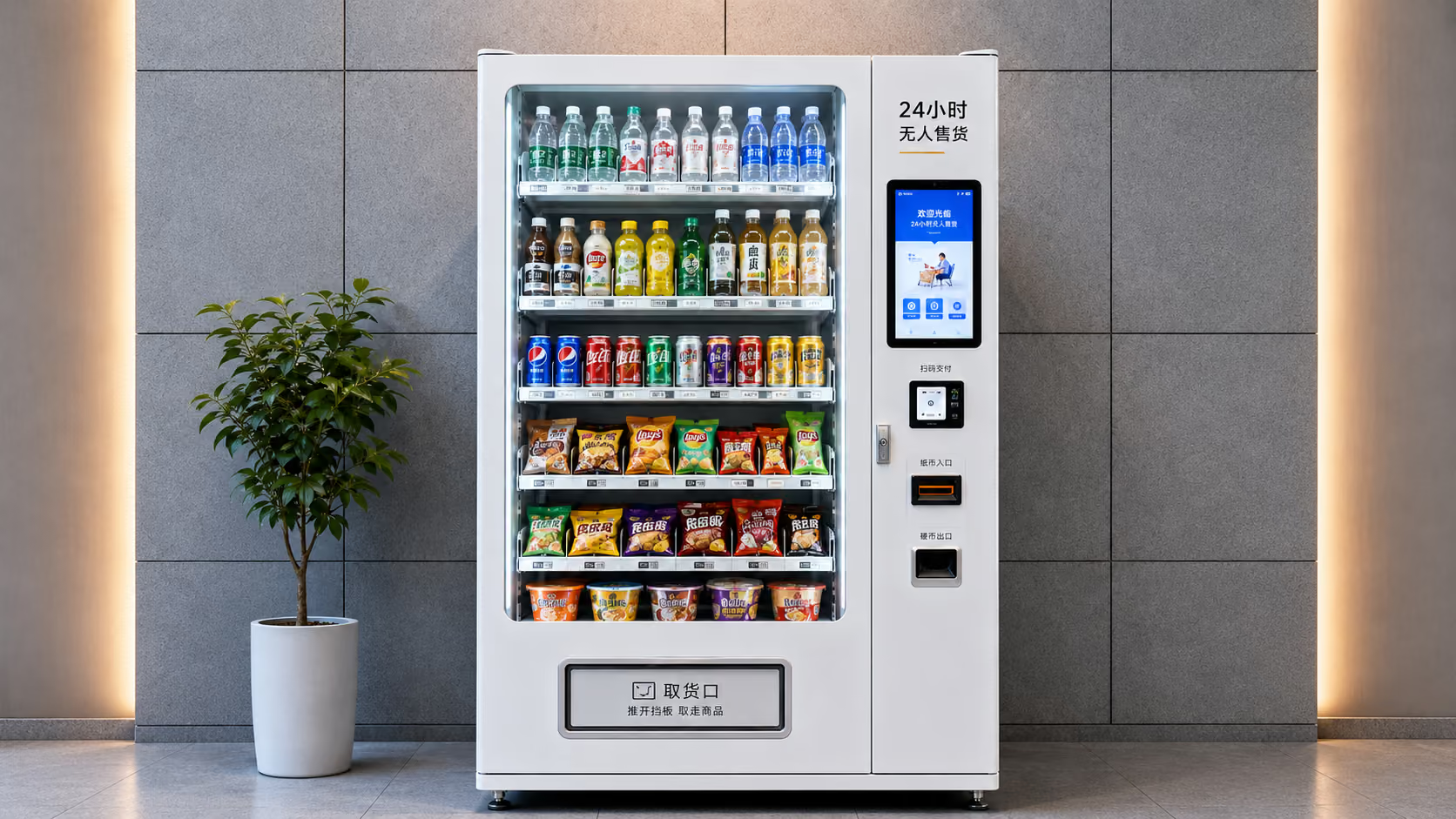
| WHD-100 | 100 matrix-driven vending lanes + current/optical sensing | 4G LTE Cat.1 / TTL | Large cabinets, vending machine remote management |
Match by compartment scale and actuator type: compartment locks → WGX-12; simple relay switching → WKG-4; large lane-based cabinets → WHD-100. Full specifications are on each product page.
From prototype to fleet
Integrate and validate 1–2 complete units first, then roll out. Also plan firmware updates and device management — boards with OTA and remote diagnostics significantly reduce long-term maintenance cost.
FAQ
Q: What if the deployment site has poor network signal? A: Test signal on site first. For basements and mall corners, consider an external antenna or a different carrier SIM; confirm the board’s supported bands and antenna interface during selection so there is room to adjust on site.
Q: What happens to the locks on power or network loss? A: The strategy (auto-unlock vs stay locked) depends on lock specification and firmware configuration. Confirm it with the vendor during selection, and choose based on your business scenario — including fire-exit requirements where relevant.
Q: Can existing cabinets be upgraded directly? A: Yes. After confirming your lock’s voltage and trigger method and the cabinet’s wiring space, replace or parallel the local controller with a networked board. Models like the WGX-12 support mainstream electronic locks with direct 4G connectivity — no gateway needed.
Competition in shared lockers is ultimately about operational efficiency. A networked board is the first step from “staff watching cabinets” to “the cloud watching cabinets”.
Related products and specifications
Use the published model pages below to verify channel counts, communication interfaces, detection capabilities and target applications.