Standard control boards cover most applications. But when your device needs unique interface definitions, a special form factor or custom firmware, ODM/OEM development is the way. Customization is not the risk — losing control of the process is, because both timeline and cost become unpredictable.
Bottom line: custom projects stay on schedule and on budget when you state requirements clearly up front and validate aggressively during prototyping — functional samples are typically delivered within 4-8 weeks after requirements are confirmed, and the cost driver is R&D and testing, not materials.
This article walks through the four phases, a phase overview table and an FAQ.
Phase 1: Requirement analysis (Week 1)
This phase decides the project’s fate. Document the device’s function list, electrical environment, communication needs and target market, then run a feasibility review with the vendor. Clearly separating “can be solved by selection” from “must be customized” often saves a large share of development cost.
Phase 2: Design and prototyping (Week 2–8)
Schematic, PCB layout and firmware development run in parallel, with functional samples delivered in 4–8 weeks. Confirm three things during prototyping: board dimensions match the mechanical structure, interface definitions match the harness, and firmware logic covers the full business flow.
Phase 3: Validation (Week 8–12)
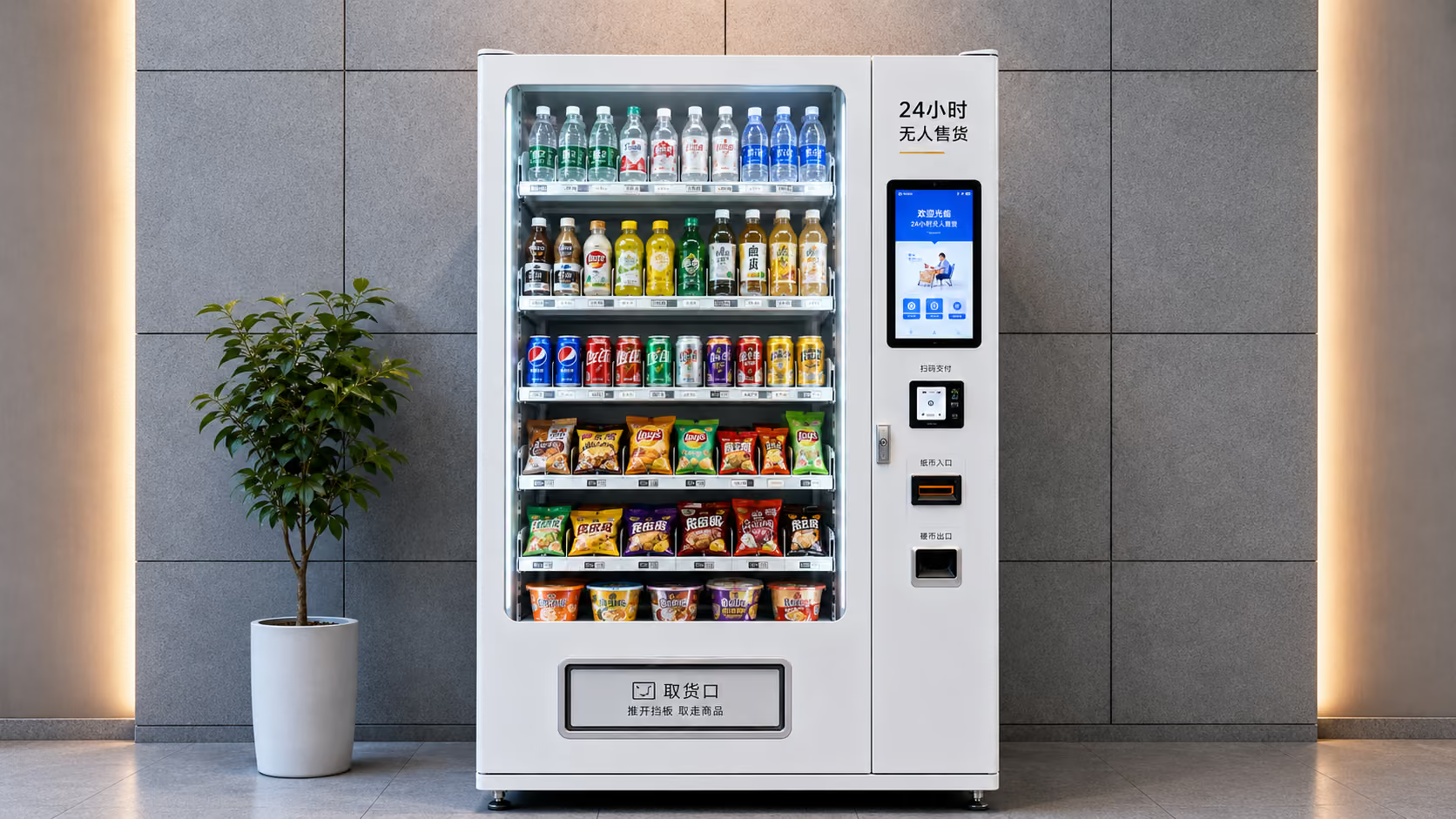
Validate thoroughly in real operating conditions — temperature, vibration, full load, extended runtime. For vending equipment, cover failure scenarios such as failed delivery detection, motor jams and network reconnection. The earlier issues surface in testing, the lower the rework cost.
Phase 4: Pilot to volume production
A mature supply chain supports smooth ramp from small-batch trials to mass production. Before ramp-up, confirm test fixtures, firmware configuration methods and spares strategy — push quality control onto the production line rather than after-sales.
Phase overview
| Phase | Timeline | Key output | Core actions |
|---|---|---|---|
| Requirement analysis | Week 1 | Feasibility review, customization scope | Separate “selection” from “customization” |
| Design & prototyping | Week 2–8 | Functional samples | Confirm dimensions / interfaces / firmware flow |
| Validation | Week 8–12 | Test report | Real conditions + failure scenarios |
| Pilot to volume | By order | Volume delivery | Test fixtures, firmware config, spares |
The key to controlling cost
The bulk of custom project cost is in R&D and testing, not materials. Stating requirements clearly up front and validating aggressively during prototyping is the most effective way to control total cost. Choosing a vendor that provides complete hardware design files and full-lifecycle support also makes future revisions and re-stocking easier.
FAQ
Q: How long does a custom control board project take? A: Functional samples are typically delivered within 4-8 weeks after requirements are confirmed. Validation and volume production timelines depend on product complexity and order size; a mature supply chain supports ramp from small-batch trials to mass production.
Q: Do you support small-batch production? A: Yes. We support everything from prototype validation to pilot runs and volume production, flexibly adapting to different stages of customer needs.
Q: What technical documentation do you receive? A: Complete hardware design files (schematics, PCB files, BOM), interface specifications, communication protocol documentation and development guides — so you can integrate quickly and handle future revisions.
Xinyun IoT provides end-to-end custom development from requirement analysis to volume delivery. Bring us your device requirements — we will give you a clear timeline and cost expectation.
Related products and specifications
Use the published model pages below to verify channel counts, communication interfaces, detection capabilities and target applications.